
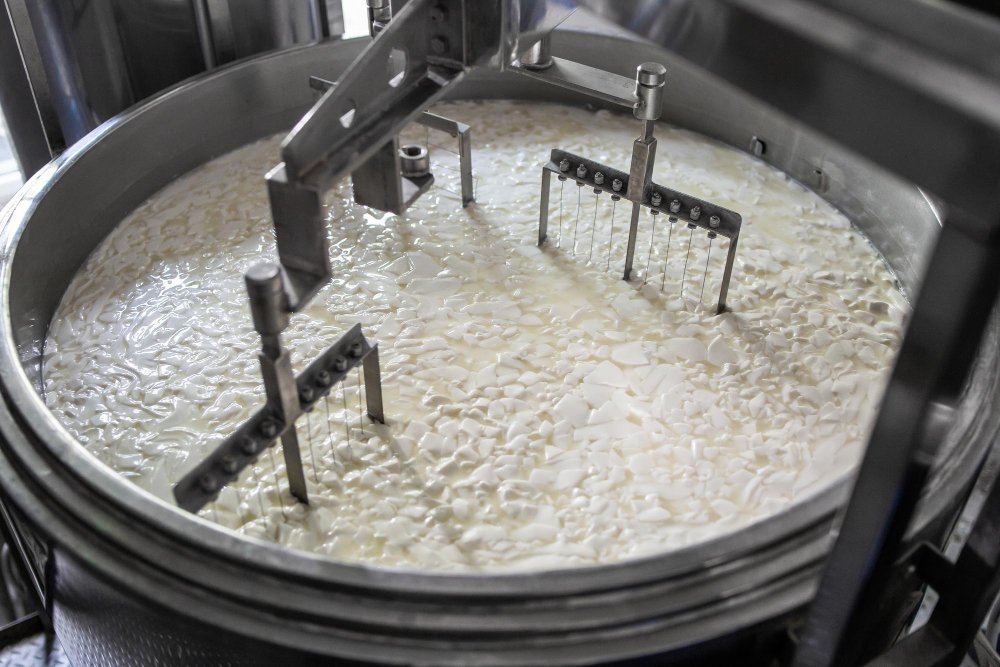
In manufacturing and food processing, achieving uniformity in every batch is a critical challenge. Variations in texture, composition, or consistency can impact both the quality and reliability of the final product. To address these concerns, manufacturers are increasingly exploring advanced methods that optimize the mixing process. These approaches focus on precise control of ingredients, timing, and motion, ensuring that each component is evenly distributed throughout the mixture. By doing so, they minimize the risk of inconsistencies that can compromise product standards or customer satisfaction.
Modern solutions often incorporate specialized equipment designed to enhance efficiency and accuracy. For instance, blending machines play a crucial role in maintaining uniformity by minimizing human error and facilitating continuous, controlled mixing. When properly utilized, these techniques contribute to predictable outcomes, consistent textures, and reliable performance across production runs. The emphasis is on refining processes that combine innovation with practical application to uphold high-quality standards.
Artificial Intelligence in Mixing Processes
Artificial intelligence (AI) is rapidly reshaping process control across industries by enabling adaptive, continuously learning, data-driven approaches. In advanced mixing operations, AI-equipped systems constantly monitor a wide range of critical parameters—such as ingredient ratios, viscosity, and water temperature—on the fly. Unlike traditional batch correction methods, which often react to quality problems only after a batch is complete, AI-driven systems can analyze sensor data in real time and intervene proactively, eliminating costly product variations before they can manifest or cause downstream issues.
Continuous mixing lines equipped with AI technologies are capable of self-adjustment within tightly controlled tolerances. These systems can even trigger alarms, adjust formulations, or send maintenance notifications instantly, thereby supporting operators as they strive to minimize downtime, reduce material waste, and enhance the quality of finished goods.
Ultrasonic Dispersion for Homogeneity
Ultrasonic dispersion revolutionizes industries by enabling the creation of ultra-uniform mixtures at micro- and nano-scale levels. High-frequency sound waves trigger cavitation, creating microscopic bubbles that collapse and release energy, breaking apart particle clusters for consistent dispersion. This results in exceptional homogeneity, which is crucial for pharmaceuticals and specialty foods, where ingredient distribution and particle size are key considerations. Industry reports indicate that ultrasonic technology effectively blends difficult powders, nanomaterials, and emulsions, resulting in higher-quality, stable, and durable products. Additionally, ultrasonic mixers operate at lower temperatures and gentler conditions than traditional mixers, helping to preserve heat-sensitive compounds and active ingredients.
Vibration-Assisted Mixing Methods
Vibration-assisted mixing, specifically the application of low-frequency oscillatory energy, has emerged as a game changer for blending challenging or high-viscosity formulations. This technique utilizes precisely controlled vibrations to agitate material masses, breaking up stubborn agglomerates, dissipating persistent clumps, and ensuring the thorough dispersion of both solids and semi-solids in fluid systems. Vibration-assisted methods have been proven to significantly reduce mixing time, facilitate more complete wetting of powders, and enhance the stability and uniformity of products such as mortars, pastes, reinforced composites, and specialty coatings.
Automation and Control Systems Integration
The integration of advanced automation, utilizing tools such as Programmable Logic Controllers (PLCs) and Supervisory Control and Data Acquisition (SCADA) systems, has introduced an unprecedented level of precision and control to industrial mixing operations. Such automation enables operators to fine-tune every mixing parameter—speed, batch size, temperature, cycle duration, and ingredient sequencing—in real-time, with adjustments based on live data rather than estimates. These control systems ensure complete traceability, comprehensive remote monitoring, and highly repeatable mixing processes, cementing their status as critical components in today’s quality-focused manufacturing environments.
Furthermore, the automation infrastructure enables manufacturers to batch large product volumes with assurance that each run will meet established quality benchmarks, regardless of variations in hourly or daily throughput.
Precision Metering and Mixing
Precision metering systems, such as gravimetric and volumetric dispensers, have established a new benchmark in ingredient dosing and blending. These automated tools precisely dispense powders, liquids, or solids within tight tolerances, minimizing batch variation and improving consistency. A case study on primerless silicone encapsulants demonstrated that these systems can reliably dispense 40g to 120g with a tolerance of +/-3%, which is critical for ensuring product performance. This level of accuracy is particularly crucial in electronics and medical manufacturing, where even minor deviations can lead to catastrophic failure. Additionally, these systems enhance efficiency by reducing labor needs, cutting waste, and seamlessly integrating into automated production lines, thus supporting high productivity, scalability, and quality in fast-paced, regulated environments.
Innovations in Powder Mixer Technologies
Recent advancements in powder mixer technology include fluidized bed mixers, double-cone blenders, and conical screw designs. These innovations enable the gentle and efficient blending of delicate particles, preventing separation or damage during processing. Fluidized bed mixers suspend particles using upward air streams to achieve quick and uniform mixing. Conical screw mixers provide low-shear blending, making them suitable for fragile powders, while double-cone blenders facilitate gentle tumbling of delicate bulk solids. These improvements, combined with advanced control software and process tracking, help ensure the production of high-quality batches and comprehensive process oversight.
Conclusion
The future of manufacturing relies on adopting innovative mixing and blending techniques such as AI-controlled systems, ultrasonic dispersion, vibration-assisted blending, and automation. These advancements enable manufacturers to increase yields, minimize waste, and produce higher-quality products. As markets and regulations evolve, companies must update their processes to enhance service and ensure compliance. Keeping up with emerging technologies helps professionals develop more innovative, safer, and more efficient production methods, whether on a small or large scale.

