


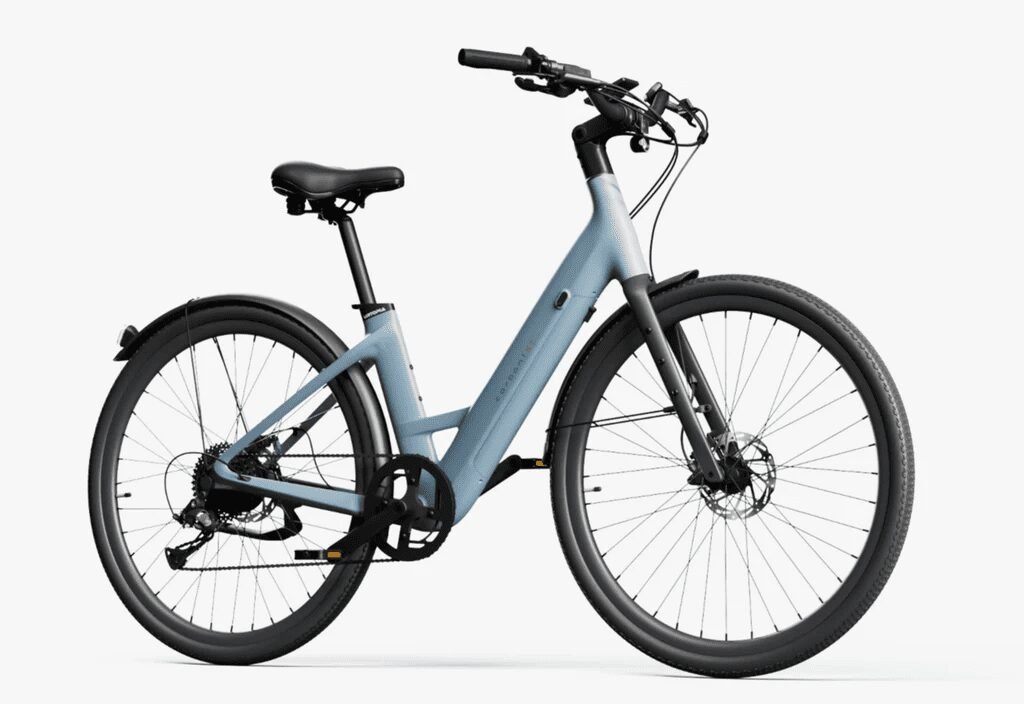
The morning commute has long been the bane of urban existence. For decades, the choice was binary: sit in gridlock in a private car or surrender your schedule to the whims of the local transit authority. However, the rise of micro-mobility has introduced a disruptive third option. As cities from New York to San Francisco densify, the question of “what is fastest” is no longer about top speeds, but about the efficiency of moving from Point A to Point B. When we look at the data, the e-bike is increasingly proving to be the ultimate “cheat code” for the modern city dweller.
The Hidden Time Tax of Public Transit
To understand why a bicycle with a motor is outperforming multi-billion dollar rail systems, we have to look at the “hidden” minutes that transit maps don’t show. If your office is three miles away, a subway ride might technically take only 10 minutes. But when you factor in the five-minute walk to the station, the six-minute wait on a platform for a delayed train, and the final trek from the exit to your desk, that 10-minute trip has ballooned into nearly half an hour.
Beyond the Subway Map
This is known as the “first-mile, last-mile” problem. Public transit operates on a hub-and-spoke model, which is highly efficient for moving thousands of people along a fixed corridor but notoriously slow for anyone whose life doesn’t start and end exactly at a station entrance. E-bikes eliminate this overhead. There is no “waiting for the next one.” The journey begins the moment you swing your leg over the frame, effectively reclaiming 15 to 20 minutes of “dead time” every single day.
The Reality of the Ghost Bus
In many U.S. metros, the reliability of bus networks has hit a historic low. Between driver shortages and traffic congestion, the “Ghost Bus”—a scheduled ride that simply never appears—has become a common frustration. When you are on a bike, you are the conductor. You aren’t held hostage by a service cut or a mechanical failure three miles up the track. This psychological “time certainty” is often more valuable to a professional than the raw speed of the vehicle itself.
Why E-Bikes Are Winning the Mid-City Sprint


The real magic happens in the “Mid-City Sprint”—trips ranging from two to seven miles. In this bracket, the e-bike is almost mathematically unbeatable. While a car or a bus is physically limited by the bumper of the vehicle in front of it, an e-bike rider exists in a different version of the city.
De-coding the Gridlock
In a dense downtown core, the average speed of a car during rush hour often drops below 10 mph. Meanwhile, a cyclist in a protected bike lane can maintain a steady 15 to 20 mph regardless of how many SUVs are backed up at the intersection. This “lane-splitting” advantage allows riders to bypass the very concept of a traffic jam. Even when looking for the best ebikes for commuting, the primary feature isn’t just a high-capacity battery, but the ability to maneuver through tight urban corridors where a bus would be paralyzed.
The Class 3 Advantage
In the United States, Class 3 e-bikes—which provide motorized assistance up to 28 mph—have changed the game for suburban-to-urban commutes. At 28 mph, a rider is moving faster than the average speed of a local bus and can often keep pace with the flow of traffic on 35 mph arterial roads. This reduces the “speed delta” between bicycles and cars, making the ride not only faster but safer, as the rider isn’t constantly being overtaken by aggressive drivers.
When the Train Still Takes the Crown
It would be dishonest to claim the e-bike wins every race. There is a definitive “tipping point” where the heavy infrastructure of public transit regains its dominance.
The Long Haul Advantage
Once a commute exceeds the 10-mile mark, the raw power of heavy rail or express commuter trains (like the LIRR in New York or BART in the Bay Area) becomes hard to beat. These systems operate on dedicated rights-of-way without traffic lights. While an e-bike rider is stopping at every red light, an express train is flying at 60 mph. For the “super-commuter” traveling from the deep suburbs into the city center, the train remains the undisputed king of speed.
Infrastructure as a Speed Limit
An e-bike is only as fast as the road allows it to be. In cities with fragmented bike lane networks, riders are often forced to take longer, circuitous routes to stay safe or slow down significantly to navigate poorly paved streets. In contrast, a subway system provides a consistent, albeit sometimes delayed, high-speed channel that is unaffected by surface-level road conditions.
The Practical Reality of Your Morning Commute
Speed isn’t just about velocity; it’s about the state you arrive in. This is where the “electric” part of the e-bike becomes critical for the professional world.
Weather and the Sweat Factor
The biggest historical argument against bike commuting was the “sweat factor.” No one wants to lead a board meeting after a five-mile uphill climb in July. The electric motor solves this by doing the heavy lifting. You can maintain a 20 mph pace with the same physical exertion as a leisurely stroll. However, the weather remains the great equalizer. In a torrential downpour or a blizzard, the “speed” of an e-bike drops as you struggle with gear and traction, while the subway remains a climate-controlled (if crowded) refuge.
The Parking and Security Bottleneck
One often overlooked aspect of commute speed is the “end-of-trip” time. A transit user simply walks out of the station. An e-bike user must find secure parking, remove their battery, and navigate bike rooms. In high-theft cities, this can add five minutes to the trip. Conversely, finding car parking in a city like Boston or Chicago can take 20 minutes, making the e-bike feel like a lightning bolt by comparison.
Conclusion
The “fastest” way to get across town is rarely the one with the highest top speed. It is the one with the fewest interruptions. For the vast majority of Americans living in urban centers—where the average commute is under 10 miles—the e-bike has emerged as the most efficient tool ever created for city navigation. It bypasses the congestion that traps cars and the scheduling gaps that plague transit.
While public transport remains the essential backbone for long-distance travel and high-capacity movement, the e-bike is the “Sprinting Champion” of the neighborhood. The future of the American city isn’t a choice between the two, but a harmony: using an e-bike to zip to the express station, effectively turning a frustrating hour-long crawl into a predictable, 20-minute breeze.