


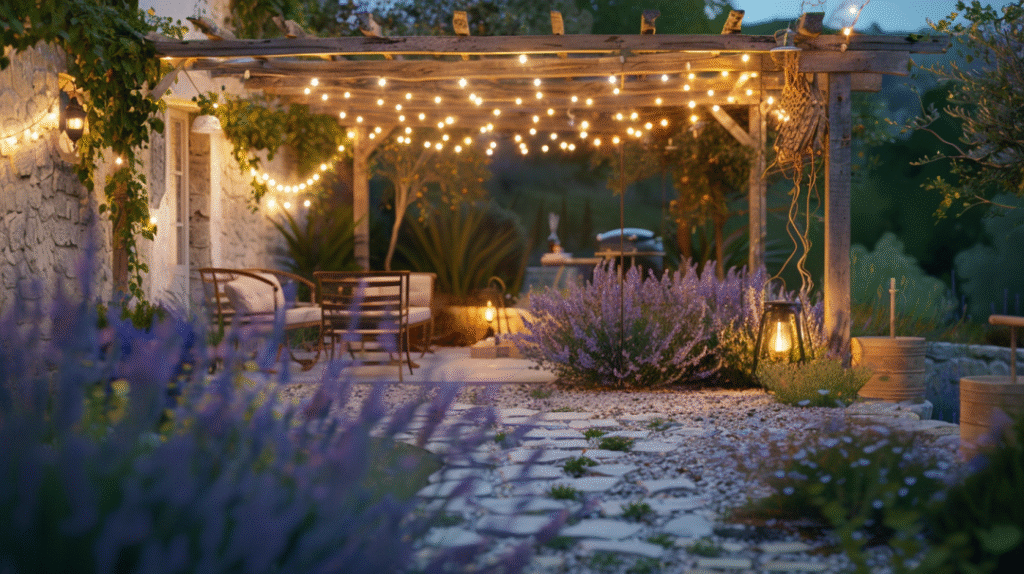
A traditional Greek garden is more than shrubs and paving. It is a living space that blends balanced lines, silver‑green plants, and the soft murmur of water.
When you adapt these classical ideas to a modern yard, you gain a beautiful haven that welcomes butterflies by day and soothes you with flowing water by night.
The seven sections below walk you through each element step by step, free of jargon, and mindful of upkeep. By the final tip you will see how a simple waterfall pump, smart plant choices, and a few humble stones can change the entire mood of your outdoor space.
1. Symmetry, Stone, and Plant Placement
Ancient Greek courtyards used symmetry to create calm. Pathways met at right angles, and plantings echoed one another on both sides. This order is pleasing to the eye and helps a small yard feel larger.
How to apply it:
- Center a focal point. Place a small olive or bay tree in a decorative pot at the midpoint of your patio.
- Mirror beds. Divide planting areas into two equal strips. Fill each with thyme, rosemary, and low lavender, keeping heights even.
- Use stone to frame. Limestone pavers or crushed white marble form crisp edges that echo sun‑soaked Greek courtyards.
Simple geometry lets every later feature, especially water stand out instead of feeling random.
2. Low‑Maintenance Water Basins (Introduce Pond Filters)
Nothing says Mediterranean calm like a smooth water basin reflecting the sky. Choose either a pre‑cast stone bowl or a sunken liner disguised with pebbles.
Key tips for hassle‑free care:
- Slim profile: A basin 30–40 cm deep stays cooler and deters mosquito larvae.
- Add pond filters early. A small sponge‑and‑bio‑media filter attached to a quiet pump traps debris and keeps water clear without chemicals.
- Shade half the surface with a trailing mint or floating water lettuce; partial cover slows algae by blocking harsh summer sun.
Set the bowl where morning light touches it and afternoon shade protects it. Clear water will reflect blue sky, giving your garden an extra dash of Aegean magic.
3. Incorporating Bubbling Fountains (Pump for Waterfall Fountain)
A gentle bubble at the basin’s center prevents water from stagnating and adds a playful note to the visual scene. Use a compact pump for waterfall fountain applications sold in most garden centers as a kit that includes tubing and a small spray head.
Why bubbling beats still water:
- Motion stops mosquitoes laying eggs.
- The sound masks traffic without becoming a roar.
- Moving water spreads oxygen, supporting any goldfish or beneficial bacteria.
Place a flat marble slab over the pump housing; drill a hole for the nozzle so only the bubbly plume is visible. The effect feels like a hidden spring, exactly the impression ancient builders loved.
4. Adding a Small Pond Waterfall Pump for Aeration
For bigger drama and even healthier water, step up to a mini fall: a hand‑stacked wall of rough stone only 60 cm high. Behind it hide a pond waterfall pump rated for 1 000–1 500 litres per hour. The pump lifts water to the top of the stones, where it spills over in a sheet.
Practical pointers:
- Slope the catch pool slightly toward the pump intake so every drop returns.
- Line the watercourse with leftover patio tiles for easy scrubbing once a month.
- Test flow until it looks natural too strong, and droplets splash away; too weak, and the sheet breaks.
A small fall boosts oxygen, reduces the need for chemicals, and provides a steady backdrop of cascading sound.
5. Wildlife Benefits + Water Flow (Touches on Ponds and Waterfalls)
Birds, bees, and beneficial insects flock to running water. A tiered setup basin, bubbler, and fall offers multiple landing levels so tiny creatures drink without risk.
- Birdbaths on edges: Add shallow dishes beside the main pond, filling them from overflow.
- Bee stones: Partially submerged flat pebbles near the waterfall lips so bees sip without drowning.
- Natural pest control: Dragonflies breed in moving water; their larvae eat mosquito wrigglers, reducing pests naturally.
Because flow is the hero here, the pumps for ponds and waterfalls you pick do double duty entertaining you and supporting backyard ecology.
6. Sensory Relaxation—Sounds of Cascading Water (Waterfall Pump)
Sound completes the Greek‑garden experience. Think of cool mountain springs trickling through olive groves.
- Tune the tone: A higher spill creates a deeper splash; a lower ledge whispers. Adjust the waterfall pump speed until the note blends with birdsong.
- Night ambience: Low‑voltage lights tucked behind the sheet of water catch each ripple, turning sound into shimmering motion after sunset.
- Mind‑body link: Studies show soft water sounds lower pulse rate, mirroring the calm many feel by the sea.
Pause benches or a pair of woven chairs near the fall. Sip coffee there, and your city lot suddenly feels like a hillside on Crete.
7. Finishing Touches: Plant Combos, Lighting, and Maintenance Gear
The magic lies in details that tie every element together.
Plant combinations:
- Silver + green: Pair olive trees with sage shrubs.
- Herb edge: Stuff thyme, oregano, and Greek basil between stones; their scent rises in warmth.
- Color pops: Bougainvillea in a terracotta pot climbs trellises, echoing island tavernas.
Lighting:
- Soft uplights under olives highlight twisting trunks.
- Warm LEDs along paths guide without glare.
- Underwater spots beneath the fall turn bubbles to glitter at dusk.
Maintenance gear & tips:
- Keep a long‑handled net and soft brush nearby to lift fallen leaves weekly.
- Clean the pond filters every month under tap water to keep flow strong.
- Back‑flush the pond waterfall pump each season to remove grit.
- Store a spare impeller; swapping one takes two minutes and revives any tired waterfall pump setup.
With these finishing touches, each feature from path symmetry to flowing water blends into a single, soothing story. Best of all, the smart use of waterfall pump, pond filters, and well‑sized pumps for ponds and waterfalls means upkeep stays easy, leaving you free to enjoy long summer evenings among scented herbs and sparkling water.
Conclusion
A Greek garden is not a museum piece; it’s a living, breathing refuge where symmetry calms the eye, herbs tease the nose, and water sounds hush daily stress.
By mirroring plants, adding low‑maintenance basins, choosing the right pond waterfall pump, and lacing the scene with gentle light, you convert an ordinary yard into an enchanting haven.
Begin with one feature: a bubbler today, a stone fall next month and let each addition carry you closer to the timeless charm of the Mediterranean coast.